
SaaS Adoption in Insurance: Turning Technology Modernization Into a Competitive Advantage

Quote from Alexanderreed on August 28, 2026, 11:50 amFor years, insurance technology modernization was primarily viewed as an operational necessity. Legacy systems needed upgrades, infrastructure required maintenance, and digital channels needed to be introduced.
That perspective is changing.
Today, SaaS adoption in insurance can influence how quickly a carrier responds to customers, launches products, integrates data, supports employees, and adopts emerging technologies.
In other words, technology is becoming part of competitive strategy.
Why Technology Can Influence Insurance Competitiveness
Insurance companies compete on more than price.
They compete on product availability, underwriting expertise, claims service, distribution relationships, customer experience, and speed of response.
Technology touches each of these areas.
A carrier that can process information faster may give underwriters better tools. A carrier with more efficient claims workflows may improve customer service. An organization that can launch products more quickly may respond to market opportunities sooner.
This makes technology architecture a business issue—not just an IT issue.
SaaS Can Reduce the Friction of Change
One of the biggest advantages of modern SaaS is flexibility.
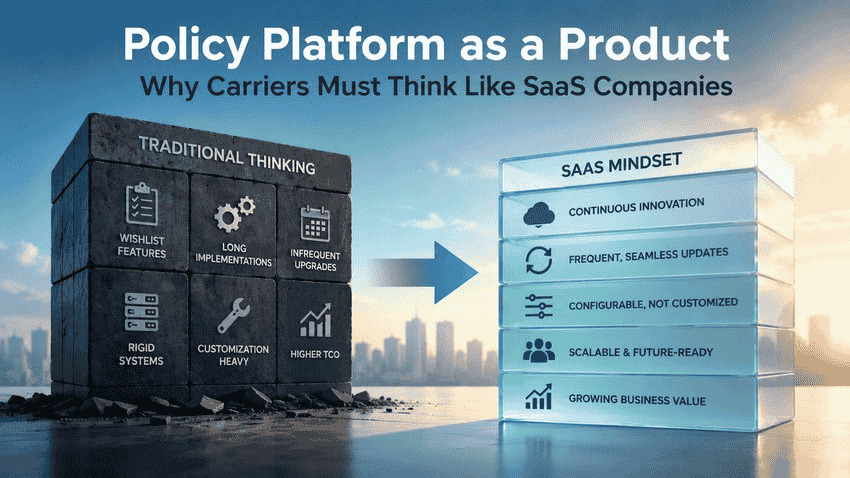
Traditional systems can require extensive development whenever business requirements change.
SaaS platforms are often designed around configurable functionality, integrations, and continuous updates.
This can help insurers adapt without rebuilding their entire technology environment.
The benefit becomes especially important when market conditions change quickly.
For example, an insurer may need to introduce a new workflow, integrate an external data source, or support a new distribution relationship.
The easier these changes are to implement, the more responsive the organization can become.
Customer Experience Is Part of the Competitive Equation
Customers increasingly expect digital experiences.
They want to access policy information, communicate with insurers, submit documents, and receive updates through convenient channels.
SaaS can support these experiences through digital portals, workflow platforms, communication tools, and integrated service applications.
The NAIC notes that technology is changing how consumers interact with insurance and is contributing to new digital approaches across the insurance value chain.
However, digital convenience should not come at the expense of security.
Insurance companies must protect sensitive information and maintain appropriate controls around identity, access, privacy, and data management.
Underwriting Speed Can Become a Differentiator
Underwriting is another area where technology can affect competitiveness.
A submission may require information from multiple sources. If underwriters spend excessive time collecting and reconciling information, the organization may be slower to respond.
A connected SaaS environment can help bring relevant information into the underwriting workflow.
AI can provide additional support.
The NAIC reports that AI/ML is being used or explored in underwriting and pricing among other insurance functions.
This does not mean that faster underwriting should mean less careful underwriting.
The objective is to reduce administrative friction so professionals can spend more time on meaningful risk evaluation.
Claims Experience Can Affect Brand Perception
Customers often remember an insurer most clearly when they need to make a claim.
That makes claims technology particularly important.
A connected claims environment can help organize documents, communications, estimates, images, and workflow activities.
Automation can reduce repetitive tasks, while AI can assist with selected information-processing activities.
The result can be a more responsive claims operation.
But technology should complement human service. A customer experiencing a major loss may need empathy and explanation—not just an automated notification.
SaaS Can Support Continuous Innovation
Competitive advantage is rarely permanent.
A platform that gives an insurer an advantage today can become standard technology tomorrow.
That means carriers need the ability to continue improving.
This is where SaaS can change the modernization mindset.
Instead of viewing technology as something that is implemented and then left unchanged for years, organizations can build an environment where new capabilities are introduced continuously.
The technology becomes a platform for ongoing innovation.
A New Way to Measure Technology
Insurance executives often ask:
“How much will this system cost?”
A more strategic question is:
“How much faster will this system allow us to change?”
Consider two insurers.
Carrier A has a system that is inexpensive to operate but requires months of development for major changes.
Carrier B has a somewhat higher technology cost but can configure new workflows and integrate services much faster.
Over several years, Carrier B may have greater strategic flexibility.
This is why insurers should consider time-to-change alongside traditional technology metrics.
SaaS and AI Create a New Competitive Dynamic
AI adoption is increasing throughout insurance.
Deloitte's insurance research identifies AI, data transformation, cloud modernization, and cybersecurity as major technology considerations for insurers.
This means the ability to adopt AI quickly and responsibly could become a competitive differentiator.
But AI does not operate in isolation.
It requires:
- Quality data
- Integration
- Secure infrastructure
- Governance
- Monitoring
- Human oversight
SaaS can help provide the technology foundation for these capabilities.
Security Remains Part of the Advantage
Competitive advantage cannot be separated from trust.
Insurers handle sensitive personal and commercial information. A technology strategy that improves speed but weakens security can create significant business risk.
SaaS providers should therefore be evaluated for cybersecurity, resilience, incident response, data protection, access controls, and business continuity.
Vendor management is not simply a procurement function.
It is part of the insurer's broader risk strategy.
Building a Competitive SaaS Strategy
Insurance leaders can evaluate SaaS platforms against several questions:
Can the platform adapt?
Can it integrate with existing systems?
Can it support emerging AI capabilities?
Can employees use it efficiently?
Can it scale as the organization grows?
Can the insurer maintain appropriate governance?
Can the business measure the resulting improvements?
These questions connect technology decisions directly to competitive strategy.
The Bigger Picture
The strongest case for SaaS adoption in insurance is not simply that SaaS can replace legacy software.
Its strategic value comes from helping insurers become more adaptable.
An insurer that can improve workflows, integrate new capabilities, respond to customers, launch products, and adopt emerging technologies without repeatedly undertaking massive technology projects can potentially move faster than competitors operating in rigid environments.
For American insurance leaders, SaaS should therefore be evaluated as a long-term capability.
The objective is to build a technology environment that does not merely support today's insurance business but helps the organization adapt faster than the market changes.
For years, insurance technology modernization was primarily viewed as an operational necessity. Legacy systems needed upgrades, infrastructure required maintenance, and digital channels needed to be introduced.
That perspective is changing.
Today, SaaS adoption in insurance can influence how quickly a carrier responds to customers, launches products, integrates data, supports employees, and adopts emerging technologies.
In other words, technology is becoming part of competitive strategy.
Why Technology Can Influence Insurance Competitiveness
Insurance companies compete on more than price.
They compete on product availability, underwriting expertise, claims service, distribution relationships, customer experience, and speed of response.
Technology touches each of these areas.
A carrier that can process information faster may give underwriters better tools. A carrier with more efficient claims workflows may improve customer service. An organization that can launch products more quickly may respond to market opportunities sooner.
This makes technology architecture a business issue—not just an IT issue.
SaaS Can Reduce the Friction of Change
One of the biggest advantages of modern SaaS is flexibility.
Traditional systems can require extensive development whenever business requirements change.
SaaS platforms are often designed around configurable functionality, integrations, and continuous updates.
This can help insurers adapt without rebuilding their entire technology environment.
The benefit becomes especially important when market conditions change quickly.
For example, an insurer may need to introduce a new workflow, integrate an external data source, or support a new distribution relationship.
The easier these changes are to implement, the more responsive the organization can become.
Customer Experience Is Part of the Competitive Equation
Customers increasingly expect digital experiences.
They want to access policy information, communicate with insurers, submit documents, and receive updates through convenient channels.
SaaS can support these experiences through digital portals, workflow platforms, communication tools, and integrated service applications.
The NAIC notes that technology is changing how consumers interact with insurance and is contributing to new digital approaches across the insurance value chain.
However, digital convenience should not come at the expense of security.
Insurance companies must protect sensitive information and maintain appropriate controls around identity, access, privacy, and data management.
Underwriting Speed Can Become a Differentiator
Underwriting is another area where technology can affect competitiveness.
A submission may require information from multiple sources. If underwriters spend excessive time collecting and reconciling information, the organization may be slower to respond.
A connected SaaS environment can help bring relevant information into the underwriting workflow.
AI can provide additional support.
The NAIC reports that AI/ML is being used or explored in underwriting and pricing among other insurance functions.
This does not mean that faster underwriting should mean less careful underwriting.
The objective is to reduce administrative friction so professionals can spend more time on meaningful risk evaluation.
Claims Experience Can Affect Brand Perception
Customers often remember an insurer most clearly when they need to make a claim.
That makes claims technology particularly important.
A connected claims environment can help organize documents, communications, estimates, images, and workflow activities.
Automation can reduce repetitive tasks, while AI can assist with selected information-processing activities.
The result can be a more responsive claims operation.
But technology should complement human service. A customer experiencing a major loss may need empathy and explanation—not just an automated notification.
SaaS Can Support Continuous Innovation
Competitive advantage is rarely permanent.
A platform that gives an insurer an advantage today can become standard technology tomorrow.
That means carriers need the ability to continue improving.
This is where SaaS can change the modernization mindset.
Instead of viewing technology as something that is implemented and then left unchanged for years, organizations can build an environment where new capabilities are introduced continuously.
The technology becomes a platform for ongoing innovation.
A New Way to Measure Technology
Insurance executives often ask:
“How much will this system cost?”
A more strategic question is:
“How much faster will this system allow us to change?”
Consider two insurers.
Carrier A has a system that is inexpensive to operate but requires months of development for major changes.
Carrier B has a somewhat higher technology cost but can configure new workflows and integrate services much faster.
Over several years, Carrier B may have greater strategic flexibility.
This is why insurers should consider time-to-change alongside traditional technology metrics.
SaaS and AI Create a New Competitive Dynamic
AI adoption is increasing throughout insurance.
Deloitte's insurance research identifies AI, data transformation, cloud modernization, and cybersecurity as major technology considerations for insurers.
This means the ability to adopt AI quickly and responsibly could become a competitive differentiator.
But AI does not operate in isolation.
It requires:
- Quality data
- Integration
- Secure infrastructure
- Governance
- Monitoring
- Human oversight
SaaS can help provide the technology foundation for these capabilities.
Security Remains Part of the Advantage
Competitive advantage cannot be separated from trust.
Insurers handle sensitive personal and commercial information. A technology strategy that improves speed but weakens security can create significant business risk.
SaaS providers should therefore be evaluated for cybersecurity, resilience, incident response, data protection, access controls, and business continuity.
Vendor management is not simply a procurement function.
It is part of the insurer's broader risk strategy.
Building a Competitive SaaS Strategy
Insurance leaders can evaluate SaaS platforms against several questions:
Can the platform adapt?
Can it integrate with existing systems?
Can it support emerging AI capabilities?
Can employees use it efficiently?
Can it scale as the organization grows?
Can the insurer maintain appropriate governance?
Can the business measure the resulting improvements?
These questions connect technology decisions directly to competitive strategy.
The Bigger Picture
The strongest case for SaaS adoption in insurance is not simply that SaaS can replace legacy software.
Its strategic value comes from helping insurers become more adaptable.
An insurer that can improve workflows, integrate new capabilities, respond to customers, launch products, and adopt emerging technologies without repeatedly undertaking massive technology projects can potentially move faster than competitors operating in rigid environments.
For American insurance leaders, SaaS should therefore be evaluated as a long-term capability.
The objective is to build a technology environment that does not merely support today's insurance business but helps the organization adapt faster than the market changes.
Uploaded files: